
TS RERA No.P02400003403.
.jpeg)
Have you every asked yourself how happy you are with your money or vice versa? We know what you’re thinking. What kind of a question is that? Right? Well, let’s give you some food for thought.
Many of us have grown up hearing that “Money can’t buy happiness”, and yet a vast majority of us motivated by the very idea of amassing wealth. Whatever income background one hails from, the want seems to be the same – the fisherman is just as keen to make money as the software CEO – that desire is innate. Why would we be so concerned, as a species, with chasing something that supposedly cannot make you happy? The truth is that money can bring happiness, or of course anguish, depending upon how we decide to use it.
A recent study, which surveyed the philosophies of 165 high net worth households, concluded with some interesting findings. When asked about what aspirations parents had for their children in the future, very few responded with grandiose dreams of their kids in high positions, but rather were more concerned with how to teach their children to live, ‘meaningful’, and, ‘impactful’, lives in their communities. This was not about the cliché of making the world a better place. This was a specific hope that their children would make, ‘their community, their neighbourhood, their family’, better. Quite taken aback the researchers were by these responses, since they did not fit in with the stereotypical view people have of wealthy people and what their aspirations are. It turned out that, across the board, those surveyed truly just wanted a better life for their children and the community around them. So, what’s the takeaway? Robert Kenny – one of the heads of this research – said of these findings in an interview that:
‘This research shows the rest of the world, who often think that if they just made one more bonus or sold one more item or got one more promotion, then their world and their family's world would be so much better, that this isn't necessarily true’.
The point he makes is that it is not so much about how much wealth one collects, but more about how one chooses to spend it, and that spending on things that feed the soul and boosts society around us will be a more significant indicator of individual happiness than how many dollars you have in your bank account.
In the early 2000s, a couple of friends – Elizabeth Dunn and Michael Norton – wrote a book entitled, ‘Happy Money: The Science of Happier Spending’, in which they introduce five clear routes to making your money “happy”:
Not surprisingly, this new-age Western thinking is somewhat reminiscent of ideas that have been explored in the Subcontinent since the Vedic era, in particular with respect to the last point above – that of Samavriddhi, which is a concept that Organo considers central to living harmoniously and happily – prosperity for all by promoting growth and development through providing a fair share to all.
What does your home do for you besides giving shelter?
We all know the answer for that question, don’t we? Well, first we through the challenge of planning it, building it and then looking after it. We spend the rest of our lives maintaining it till such a time that we can’t anymore. The bigger the home, the larger the concerns. Whereas, when we choose to live in an eco-habitat like Organo, our homes demand less from us and give back a lot more than just a shelter - food, comforts, conveniences + the opportunity to be a part of a larger social & environmental impact willy nilly.
By just living in it, you become a part of preserving, conserving & co-existing with Planet Earth’s inhabitants in addition to contributing positively to the neighbouring villages & villagers.
So how are the ways in which we achieve this? In many ways. To begin with, we nurture the neighbourhood farmers to convert to organic farming. Next, we skill & upskill manpower and place them in jobs like housekeeping, farming and maintenance, thereby creating a win-win situation for both the villagers and the residents of the community. The maintenance fee paid by the community creates a ripple effect leading to economic growth for the society at large. Electricians, plumbers, carpenters and the like are also sourced for jobs as and when they arise.
Currently the vast majority of farming in India relies on pesticides and genetically modified strains of produce to maximise crop yield. It can be quite intimidating for farmers to switch to organic farming, firstly because most of the skills required have been long forgotten about, and secondly because they may worry about whether their organic harvest will sell – after all, organically produced food is still consumed far less than mass produced food. Here though, we not only farm organically ourselves, but also buy in locally produced organic food directly from farmers that have been taught how to farm in this way, cutting out the middleman and guaranteeing a fair price straight to the grower.
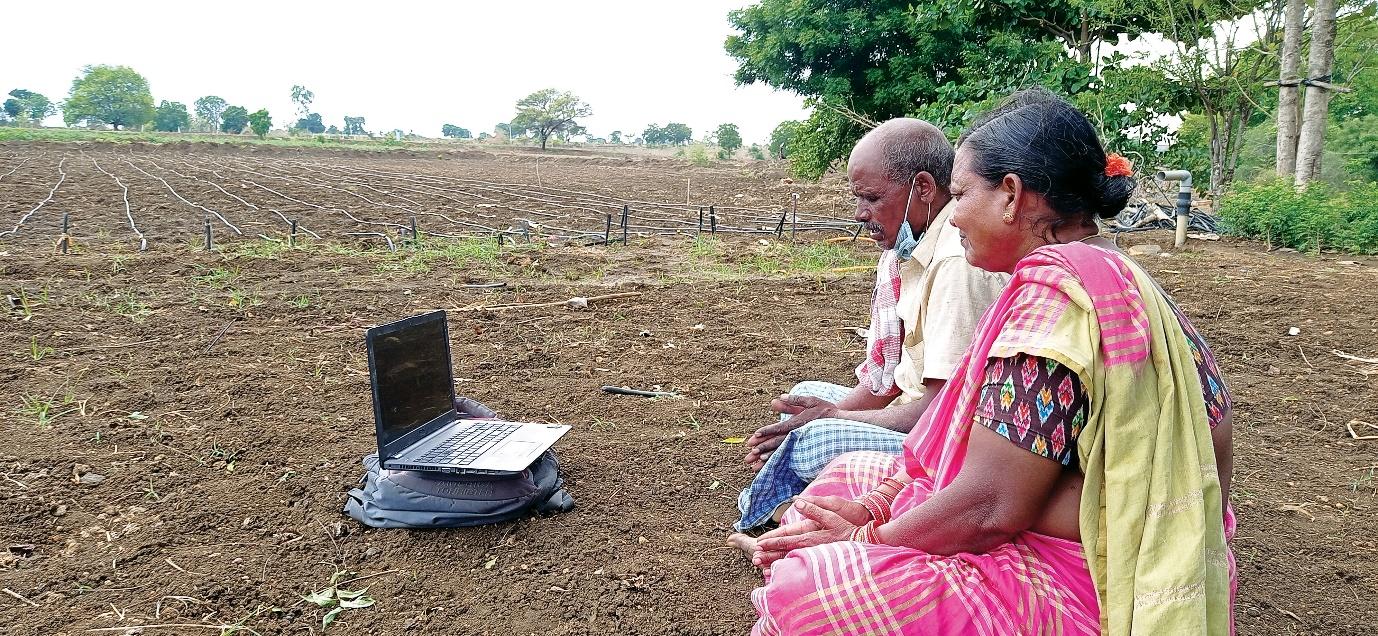
This Rurban way of life effortlessly blends the desire for people to live rurally, with the full understanding that people moving from urban environments are used to modern conveniences. By investing in a home in this habitat, that much desired immersion into a village-style life is achieved, whilst knowing that you have also invested in the development of the surrounding villages and their inhabitants. And really, this is the essence of “happy money” – to spend in a way that not only pleases the self but that also improves quality of life for others, and to play a part in creating a better future for the generations to come. That too, by doing nothing more than just choosing to live in the Organo eco-habitats.
Did you get the drift? Now you know how to make your money happy. Happy mulling then!

