.svg)
.avif)
Sapthapatha - Seven Strands of Sustainability
Sapthapatha - Seven Strands of Sustainability
At Organo, the idea of fair share is embedded deeply and empathetic design to create harmonious coexistence where people live alongside nature with a fair share for all becomes central to how we work.
Living life on a slow track that is good for us but done in a way that is good for our environment and our neighbouring communities not only makes us healthier but also helps us savour deeper and richer experiences of being part of something bigger, of leaving a lasting legacy to be proud of.
Sustainability then is the guiding principle for all the work. Everything we need for our survival and well-being depends, either directly or indirectly, on our natural environment. To pursue sustainability is to create and maintain the conditions under which humans and nature can exist in productive harmony to support present and future generations.
What is Sapthapatha?
Organo created a framework called Sapthapatha (Seven Strands of Sustainability) with an intent to design and measure the impact of the eco-habitats. Food, Water, Air, Earth, Energy, Shelter, and People are the central strands that we focus on to enable sustainable living.
Says Nagesh Battula, Co-Founder of Organo eco-habitats, “Food, water, air, earth, energy, shelter and people are all intrinsically interlinked and interdependent. One is incomplete without the others. Unless we integrate all the seven elements, sustainable living will remain incomplete. Sapthapatha is our guiding principle in all our communities.”
Cycles of Sustainable Living
It has taken several years of research, development, trials and successes for Team Organo to make a breakthrough and arrive at the seven cycles. Each cycle has its own sustainable aspects; all the cycles are interlinked and flow naturally into each other. Each influences the other, shaping design from community spaces to home.
Air
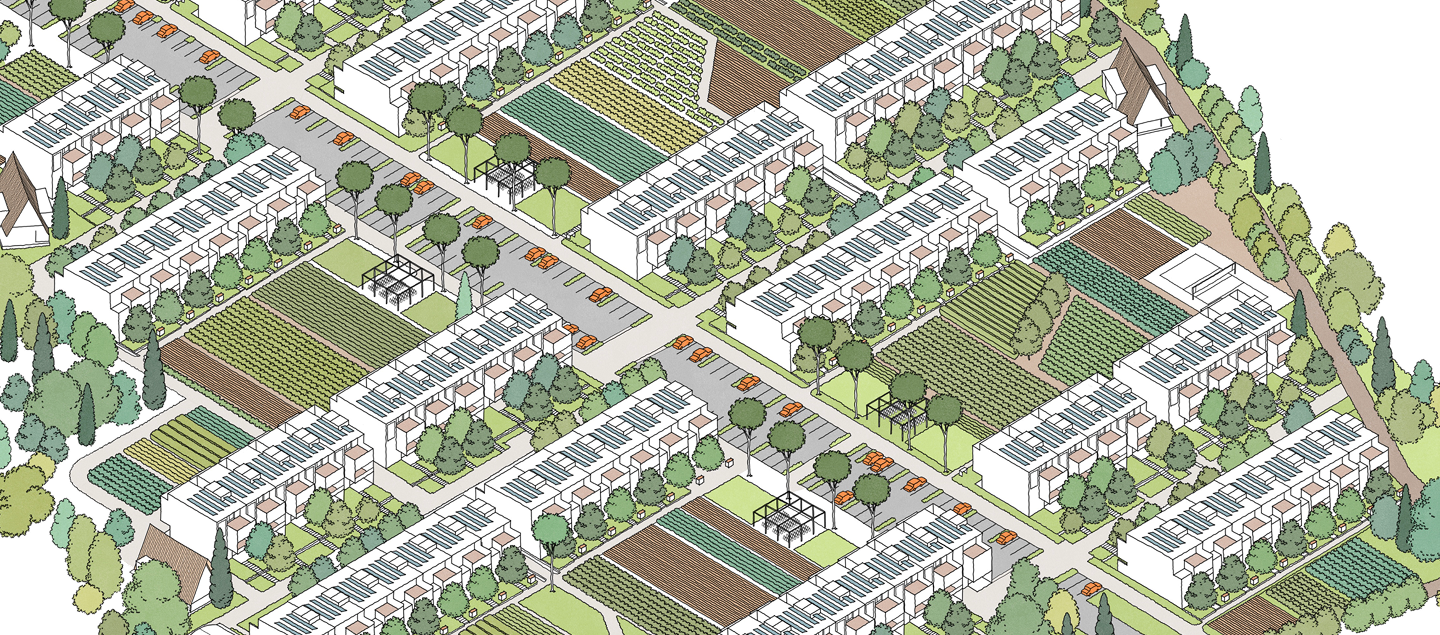
Clean, breathable air is supported through car-free streets, tree-lined breezeways, and homes designed to channel natural airflow. Movement replaces machinery.
Water
Rain is harvested, greywater reused, and stormwater guided through natural channels. Water is retained and respected at every step.
Food
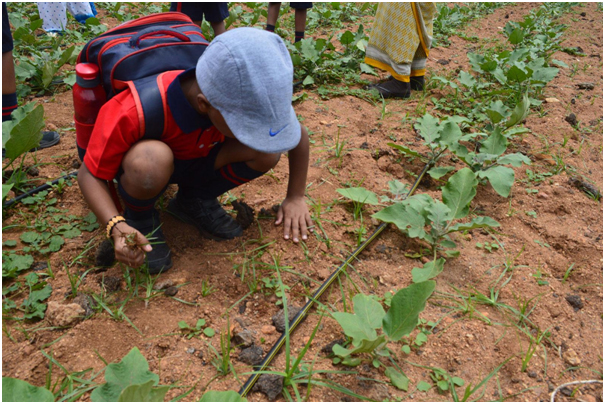
Every habitat includes edible landscapes, seasonal farms, and chemical-free practices. Food is grown close to home, by and for the community.
Earth
Layouts follow land contours. Topsoil is preserved and soil life is regenerated through organic practices that support biodiversity below the surface.
Shelter
Homes are designed for thermal comfort using shaded courtyards, passive cooling, and tactile materials. Built to work with climate, not fight it.
Energy
Energy use is reduced by design, then met with renewables like rooftop solar and biogas. Clean power supports daily life.
People
Communities are designed to connect naturally—with shared spaces that support togetherness, respect privacy, and build lasting bonds.



.jpeg)